For decades, the formula for professional success was simple: Experience + Technical skills = Value.
In 2025, that formula is broken.
AI can match (and exceed) 10 years of experience in seconds. Technical skills become obsolete in months. The only thing that cannot be automated or replicated is the human capacity to adapt, learn, and reinvent oneself.
Welcome to the era of Adaptability.
What is Adaptability Really?
Adaptability isn’t simply “being open to change.” It’s a complex competency that includes:
The 5 Components of Adaptability
- Cognitive Flexibility: Changing perspective, considering multiple solutions
- Tolerance for Ambiguity: Functioning without complete information
- Resilience: Recovering from failures and setbacks
- Active Curiosity: Proactively seeking new knowledge
- Unlearning: Abandoning practices that no longer work
How It Manifests in OCEAN
Adaptability correlates mainly with OCEAN dimensions (6 dimensions at Talen.to):
- Openness (O): r = 0.65 (most correlated)
- Emotional Stability (EE): r = 0.45
- Extraversion (E): r = 0.25
- Structure & Rhythm (ER): r = 0.30 (collaboration in changing contexts)
At Talen.to, we measure Adaptability as a composite index that weights these dimensions according to work context.
Why Adaptability > Experience in 2025
What the Research Shows
Organizational psychology literature is consistent: behavioral adaptability—measured as Openness to Experience + Emotional Stability—predicts job performance more strongly than years of experience in fast-changing roles. In tech environments, where tools and frameworks constantly evolve, that gap widens.
Experience alone doesn’t guarantee performance when the context shifts. What separates those who thrive from those who stagnate isn’t how many years they’ve spent in the industry—it’s how quickly they integrate what’s new.
Real Case: The 15-Year Developer vs The 2-Year Junior
Developer A: 15 years of experience, expert in legacy technologies, Adaptability score 45/100.
Developer B: 2 years of experience, generalist, Adaptability score 88/100.
12 months later:
- Developer A: Resisted AI tool adoption, stagnant productivity, frustrated
- Developer B: Integrated GitHub Copilot day 1, +40% productivity, promoted
Experience became a burden when change arrived.
How to Evaluate Adaptability in Hiring
Red Flags (Low Adaptability)
On the CV:
- Same role/company for 10+ years without evolution
- Exclusively legacy technologies
- No side projects or continuous learning
In the Interview:
- “We’ve always done it this way”
- Long answers justifying current methods
- Discomfort with hypothetical questions
- Resistance to discussing AI
Green Flags (High Adaptability)
On the CV:
- Successful role/industry transitions
- Diverse projects and continuous learning
- Early adoption of new technologies
In the Interview:
- “It depends on the context…”
- Genuine curiosity about how your company works
- Questions about future stack and tools
- Enthusiasm (not fear) when talking about AI
How to Develop Adaptability in Your Team
1. Create Psychological Safety
Employees don’t adapt if they’re afraid to fail. They need to know that experimenting is allowed.
2. Foster “Job Crafting”
Allow employees to gradually modify their roles. Forced adaptation generates resistance; organic adaptation generates ownership.
3. Controlled Exposure to Change
Don’t throw everyone in the deep end. Introduce changes gradually, celebrate early adopters, give time to others.
4. Incentivize Continuous Learning
- 20% time for learning projects
- Education budget
- Recognition for new skills
Conclusion
In a world where AI levels the field of technical skills, Adaptability is your competitive advantage—as an individual and as an organization.
Companies that hire for Adaptability in 2025 will dominate in 2030. Those that keep hiring for experience… well, ask Kodak how that went.
Assess Your Team’s Adaptability
Start with Talen.to - Adaptability assessment included in all plans.
Related OCEAN+ profiles
Discover which personality dimensions to look for in each role.
Related Articles

Culture Amp Alternative for Pre-Hire Culture Fit
Culture Amp excels at engagement. Need culture fit before you hire? See how Talen.to compares.
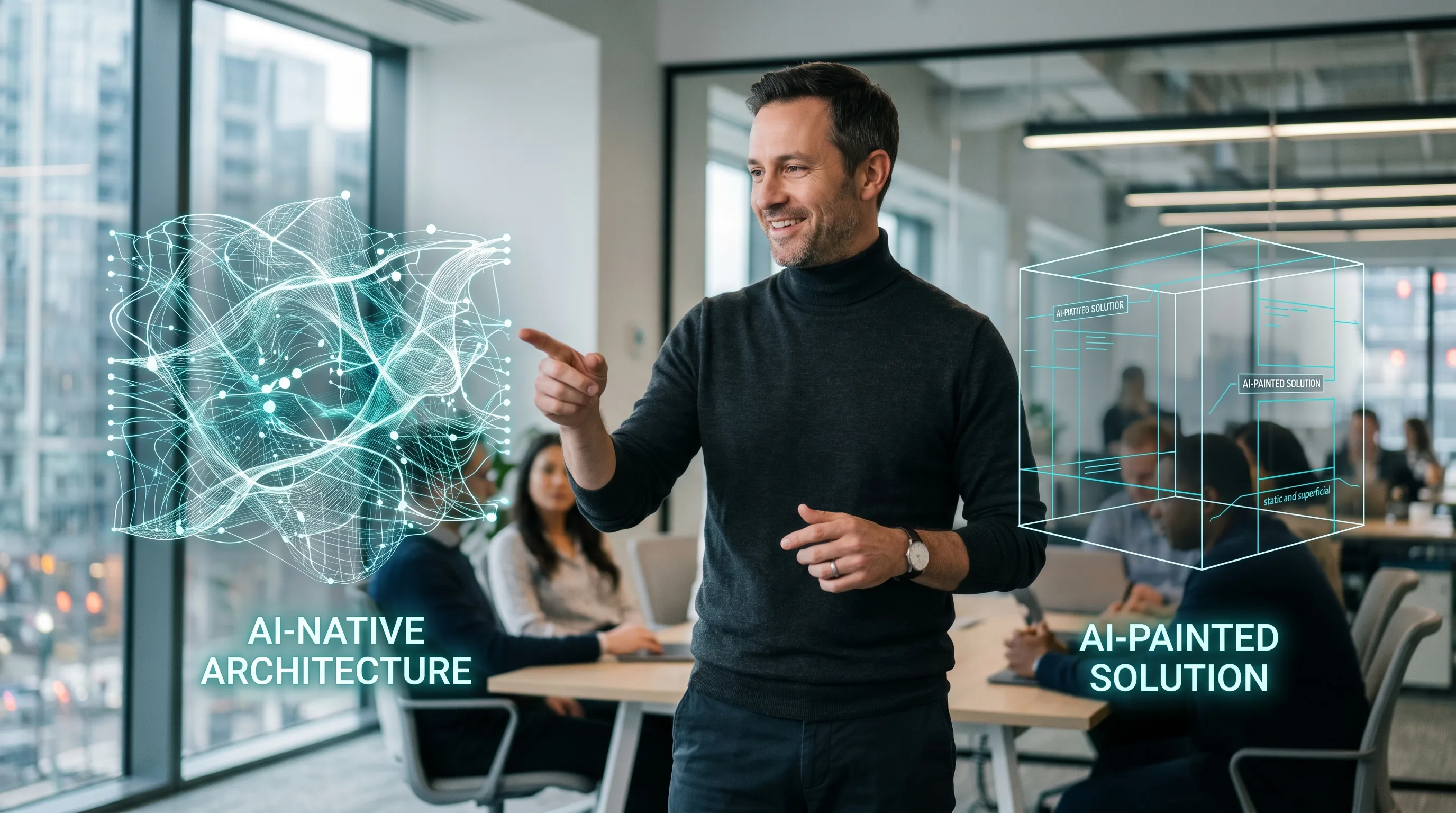
AI-native vs AI-painted: the difference that matters in HR Tech
Having AI is an empty label. The real question is what your AI specifically does, who audits it, and whether you can modify it. AI-native vs AI-painted explained, with concrete examples of what each looks like.
OCEAN+ with AI: Why Domain Expertise Beats ChatGPT
Not all AIs are equal. We show you the difference between generic and specialized AI in psychometrics, with real examples.